When AI Decides Better Than You, Why Does It Feel Like Losing?
Evidence about AI is rarely judged on its own merits; the comparison it invites, and what conceding it would mean for the person conceding, may matter as much as the numbers.

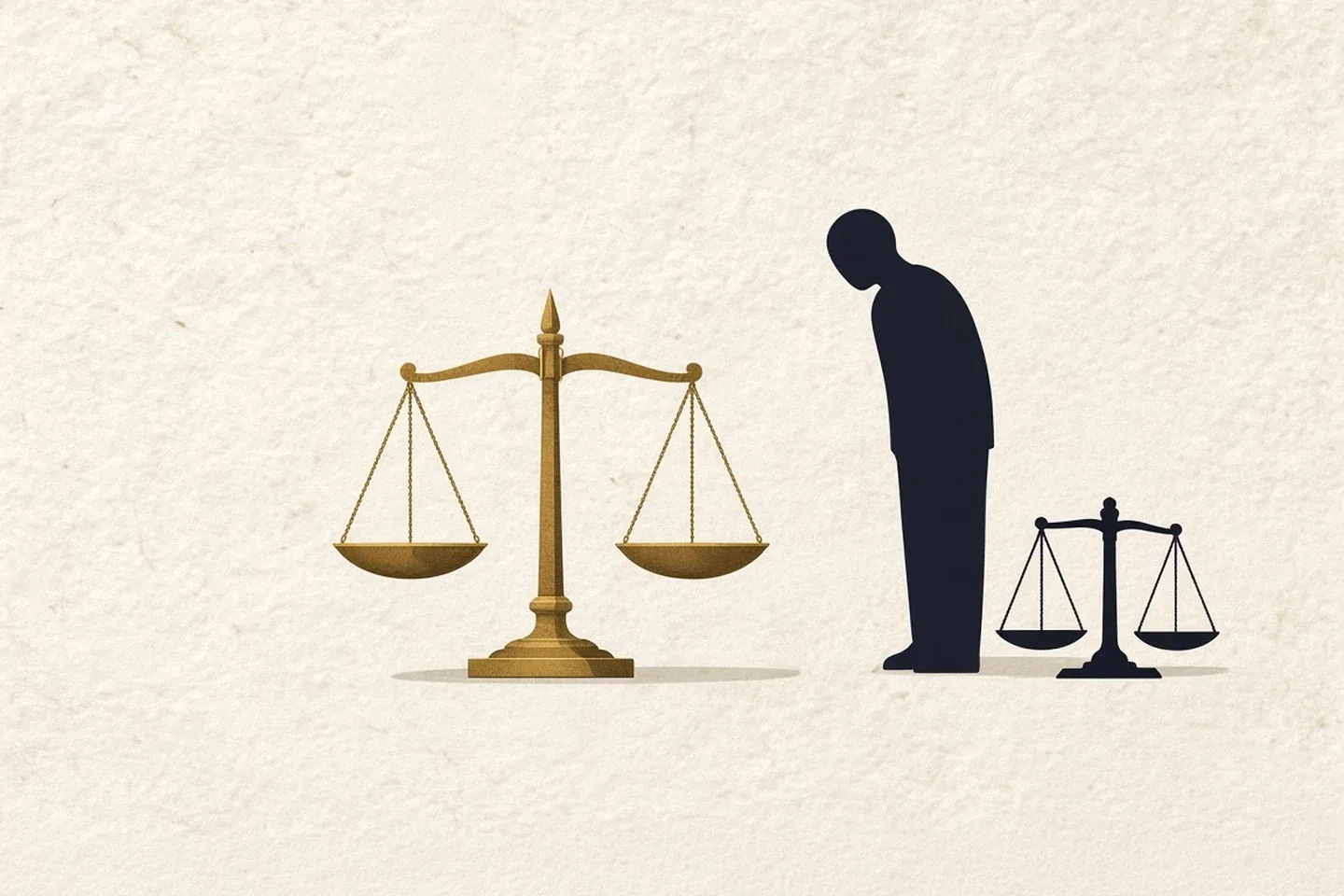
Most internal cases for AI are built as arguments about accuracy, while the people hearing them may be weighing something closer to what agreeing would say about them.
Many organisations will recognise a version of the same meeting, in which someone presents a slide showing that the forecasting model beat the planning team’s numbers in five of the last six quarters, the chart is clear and the method is sound, and the room goes politely quiet. Then the head of planning asks, quite reasonably, about the sixth quarter, and the next twenty minutes are spent on the one miss, while the five wins sit on the screen with nobody looking at them. The presenter leaves convinced that the problem was a lack of evidence and goes off to build a longer deck.
The STAR Framework suggests a different diagnosis, because it treats a judgement about evidence as an appraisal as well as a calculation: people weigh what a claim means for them, and “the model decides better than you” is a claim about competence and standing as well as accuracy. If that is right, selling an AI decision tool inside an organisation is partly an appraisal problem and only partly a logic problem, and a longer deck answers the wrong half. That is my interpretation, and none of the research below tested it, but three recent pieces of research and one older one are consistent with it.
The comparison sets the verdict
In March and April, the University of Exeter reported a study by Florian Stoeckel of Exeter, Ben Lyons of the University of Utah and Adrienn Ujhelyi and Monika Kovacs of ELTE Eötvös Loránd University. According to the university’s April announcement, it was a preregistered survey experiment with more than 11,000 respondents in Austria, Germany, Hungary, Italy, the Netherlands, Poland, Spain and the United Kingdom, recruited through online panels run by YouGov, using samples designed to approximate national populations. Respondents were asked how likely they thought they would be to face discrimination in public-sector recruitment run by AI or by human recruiters, and the order of the questions was randomly varied. When people considered human recruiters first, their concerns about discrimination by AI were lower, and when they considered AI first, their concerns about human recruiters were higher, compared with respondents who answered in the other order.
The same kind of process, in other words, looked more or less worrying depending on what respondents had just been asked about. Stoeckel drew the practical lesson himself in the March announcement, warning that those who want to increase acceptance of AI may “emphasise the shortcomings of human decision makers rather than demonstrating that a specific AI system actually operates fairly”, and that trust “should be based on actual advantages and performance, rather than on comparisons with human weaknesses.” The study measured citizens’ perceptions of discrimination risk, not employees’ reactions to a tool that outperforms them, and the announcements do not name a journal, so I have worked from them, but its relevance here is narrower and still useful: judgements of AI are relative, and the reference point does a great deal of the work.
Five wins and one miss
The meeting in my opening has a respectable pedigree, because Berkeley Dietvorst, Joseph Simmons and Cade Massey ran five studies in which participants decided whether to tie their incentives to the forecasts of an algorithm or of a human (Dietvorst, Simmons & Massey, 2015). Those who had seen the algorithm perform were less confident in it and less likely to choose it over an inferior human forecaster, even when they had seen it outperform the human, and the authors attribute this to people losing confidence in algorithmic forecasters more quickly than in human ones after seeing them make the same mistake, part of a wider tendency they called algorithm aversion.
STAR’s Distortion Layer, its name for the cognitive bias pillar, is where I would file that asymmetry, with the caveat that Dietvorst and colleagues studied forecasting tasks in controlled conditions and did not test STAR. A human who misses a quarter has had a bad quarter, while a model that misses one has revealed a flaw, and the two errors are often not weighed on the same scale.
Who does which part
The MIT Sloan piece is the most practical of the four: on 22 September, Beth Stackpole described the AI Decision Matrix, developed at the MIT Center for Information Systems Research by Ina Sebastian, Peter Weill, Thomas Haskamp and Jan vom Brocke and set out in a June research briefing drawing on 30 interviews with 27 executives at nine global companies. It sorts decisions by ambiguity, meaning how clearly the data determines the answer, and by risk, meaning the consequences of getting it wrong, into four types: routine, consequential, exploratory and strategic. Each type implies a different role for AI in framing the decision, acting on it and learning from the outcome, with human oversight retained across all four. In the telecoms company One New Zealand, used as the worked example, every deployed agent has a named human owner, and in customer service, decisions involving pricing keep a human in the loop.
The matrix answers the logic question well, and my reading, which nobody has tested, is that it may also help with the appraisal question, because it replaces “who is better” with “who does which part of which decision”, and a person can concede that a model should handle routine segmentation without conceding anything about their own judgement on strategy.
The case for the sceptic
It would be convenient to conclude that resistance is mostly self-image wearing a lab coat, and the Lancaster evidence is a reason not to. Joe Pearson, Itiel Dror, Emma Jayes, Grace-Rose Whordley, Georgina Mason and Sophie Nightingale asked 295 online participants to judge whether 80 faces, 40 real and 40 AI-synthesised, were real, with guidance presented as coming from either humans or AI and correct only half the time (Pearson et al., 2026). Overall, the source of the guidance made no significant difference to performance, and participants were more inclined to follow it when it was correct, whatever its source. Among those who received AI guidance, though, more positive attitudes towards AI went with a poorer ability to tell real faces from synthetic ones, while trust in other humans showed no detectable effect for those given human guidance. In Nightingale’s words, as reported by Lancaster University, “people with a positive view of AI may be at higher risk of being misled by AI tools.” Attitudes were measured rather than manipulated, so this is an association within an experiment, in a single face-judging task.
Taken together with Exeter, the point cuts both ways, since enthusiasm for AI is not the same as calibration, and a sceptic asking awkward questions about the sixth quarter may be doing the organisation a service.
What the evidence lands on
STAR’s Appraisal Theory pillar offers the interpretation that ties these together, again one the studies did not test. Klaus Scherer’s account of appraisal, developed to explain how emotions arise, describes checks of relevance, implications, coping potential and fit with one’s values and norms. Carried over to the meeting room, “the model is better” is highly relevant to the people whose forecasts it replaces, its implications for their role are unclear, their sense of how they would cope is untested, and it may sit awkwardly with professional norms built over years, so it is hardly surprising that the same evidence can feel like progress to one person and like losing to another.
STAR’s Thinker lens, which foregrounds competence, understanding and considered analysis, makes the point sharper, with nobody assigned to it. Self-Determination Theory, another STAR pillar, names competence as one of three basic psychological needs alongside autonomy and relatedness (Ryan & Deci, 2000), and through the Thinker lens a claim that a model judges better can read as a threat to competence and standing before it reads as a finding. STAR’s Realist lens, which foregrounds security, stability and reliability, along with simplicity and ease, is a reminder that asking for reliability records and clear decision boundaries can be a reasonable standard rather than an obstacle, again with nobody assigned to it, and none of these lenses was tested by any of the studies here.
A toolkit for the internal case
- Agree decision rights before arguing about accuracy. Map the decisions in question by ambiguity and risk, and agree who frames, acts and learns for each, so that the conversation is about which part of which decision a model takes on.
- Do not win by running down the humans. The Exeter work suggests that turning attention to human bias can make AI seem less worrying, and its lead author warns that this can happen without the AI being shown to be any fairer, so make the case on the system’s own record.
- Show both error records on the same basis. Present the model’s misses and the human misses side by side and over the same period, so that one bad quarter is weighed against the right comparison.
- Keep a named human owner and protect the sceptic. Give every deployed tool someone accountable for its results, and treat the colleague who keeps asking about the miss as part of the checking process, since enthusiasm and calibration are different things.
The test question for any internal AI case is short: what would this person have to concede about themselves if they agreed with the evidence?
Back in that meeting, the head of planning asking about the sixth quarter was probably not confused by the chart. The question may have been the only available way to ask what the other five meant for the team, and a presenter who answers that one first may find the sixth quarter matters rather less than it seemed.
If you would like to see which Mindsets tend to lead for you, the STAR Cognitive Profile Assessment at starassess.com takes 33 questions, and the assessment and its full report are both free, which may be a useful starting point for noticing which kinds of evidence you find easy to accept and which you find yourself arguing with.
David Chadderton is a behavioural strategist, Chief Marketing Officer and STAR Dynamics. He writes The Unoptimised Human.
References
Dietvorst, B. J., Simmons, J. P., & Massey, C. (2015). Algorithm aversion: People erroneously avoid algorithms after seeing them err. Journal of Experimental Psychology: General, 144(1), 114–126.
Lancaster University. (2026, 10 February). Why relying on AI may lead to poor decision making [News release].
Maddern, K. (2026, 20 March). Drawing attention to the limitations of human decision making makes the use of AI seem less problematic, study shows. University of Exeter News.
Maddern, K. (2026, 10 April). Thinking about AI can make people more critical of human decision-makers, study shows. University of Exeter News.
Pearson, J., Dror, I. E., Jayes, E., Whordley, G.-R., Mason, G., & Nightingale, S. (2026). Examining human reliance on artificial intelligence in decision making. Scientific Reports, 16, 5345.
Ryan, R. M., & Deci, E. L. (2000). Self-determination theory and the facilitation of intrinsic motivation, social development, and well-being. American Psychologist, 55(1), 68–78.
Scherer, K. R. (2001). Appraisal considered as a process of multilevel sequential checking. In K. R. Scherer, A. Schorr & T. Johnstone (Eds.), Appraisal Processes in Emotion: Theory, Methods, Research (pp. 92–120). Oxford University Press.
Sebastian, I. M., Weill, P., Haskamp, T., & vom Brocke, J. (2026, 18 June). Designing decision rights for AI. MIT CISR Research Briefing, XXVI-6.
Stackpole, B. (2026, 22 September). A framework for determining when AI can make decisions. MIT Sloan Ideas Made to Matter.
Eight minutes. Thirty-three questions.
A precise picture of how you operate: motivations, decision style, and blind spots. Free to start.
- S
- T
- A
- R
The canonical source.
Essays, when there is something worth sending. Choose the subjects you want. I will ask you to confirm the address before I write.